
The Suez Canal Blockage
Notes on Complexity and Progress (Note 1)

The concept behind this post is described here, and the metalanguage here. You can download the typeset PDF here.
COMPELLING stories have the power to imprint meaning in an otherwise complex, unpredictable and chaotic world [■]. One such story that quickly made rounds in the public consciousness was the blockage of the Suez Canal in 2021. In the early hours of the 23rd of March, the Ever Given blocked the canal, resulting in massive losses in global trade. At that time, the world was still shrouded in confusion [■] because of the COVID-19 pandemic, and a clear story like that was bound to resonate.
The Empire State Building-sized container ship, despite the support of a canal authority pilot on board, got wedged diagonally into the sandy embankment in the southern part of the canal. This consequently blocked traffic, with around 400 ships hindered at the entrances in both directions [1] [⧖]. Some decided to go around the Cape of Good Hope, adding weeks to their journey, with some Russian ships opting to go through the Arctic.
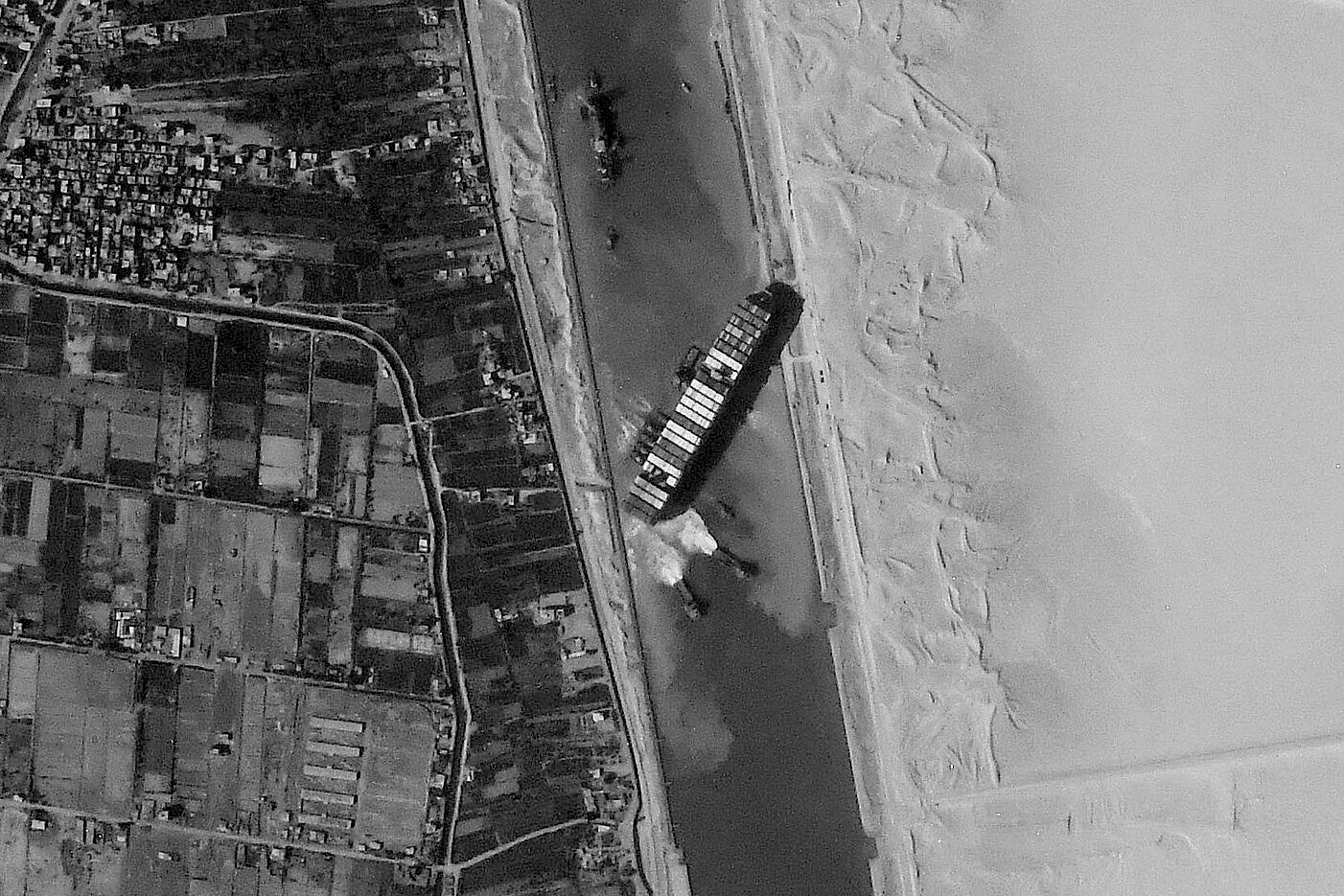
Eventually the ship was dislodged, yet the causes of the accident remain debated. It was a perfect storm of factors: there was a dust storm that very morning resulting in high winds, there were rumours of electrical malfunction and of human error. The adverse impact of that disaster was estimated to be in the region of $9.7bn per day (10% of global maritime traffic) [2] in disruption of global supply chains. The cascading effects lasted several months [3] [↺, ⤕]
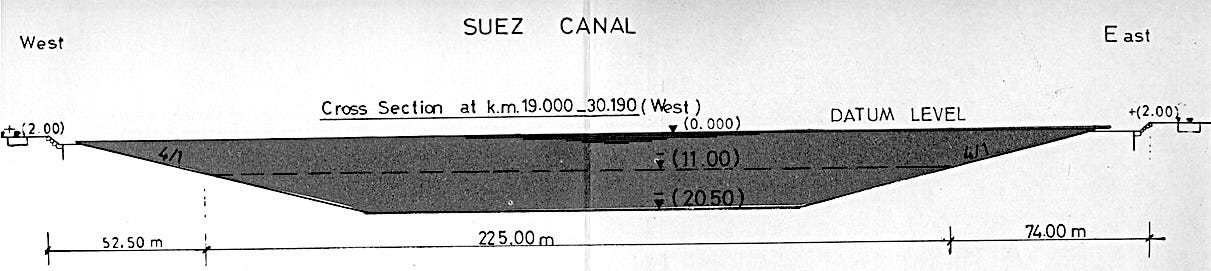
The fragility of just-in-time globally connected supply chains will increase as the world becomes more complex. The Strait of Hormuz, another example of a potential bottleneck that could be blocked due to the geopolitical tensions in the area [⧖]. The lack of redundancies (such as dual sourcing, and two-way continuous traffic in this case), is a significant contributing factor to system fragility [◘].
Metalanguage
Bottleneck: ⧖
Delay: ⤕
Feedback Loop: ↺
Black Box: ■
Fragile System: ◘
Bibliography
[1] J. Lee and E. Wong, “Suez Canal blockage: an analysis of legal impact, risks and liabilities to the global supply chain,” MATEC Web of Conferences, vol. 339, p. 1019, 2021, doi: 10.1051/matecconf/202133901019.
[2] J. Harper, “Suez blockage is holding up $9.6bn of goods a day.” Accessed: Dec. 07, 2025. [Online]. Available: https://www.bbc.com/news/business-56533250
[3] S. Qu et al., “Modeling the dynamic impacts of maritime network blockage on global supply chains,” The Innovation, vol. 5, no. 4, p. 100653, 2024, doi: https://doi.org/10.1016/j.xinn.2024.100653.