
The Case for Social Progress
Why economic and technological progress are just not enough

Note: in this article, I’ll combine the terms scientific and technological progress (while acknowledging the differences).
Much of the literature on progress and the progress studies movement itself has so far focused on defining progress as divisible into two terms—economic and technological. The argument goes: if both economic growth and the rate of innovation continue growing, we will be well-poised to tackle the most pressing challenges the 21st and 22nd centuries have to offer.
To be clear, this is not an unfounded thesis and is based on sound historical data. The most significant improvements in social progress1 have been closely tied to jumps in wealth and technology. The work of Steven Pinker (see resources) provides many graphs to support this argument, but let’s start with this one (note, these are countries from the Western world; the picture in less democratic countries is different and covered by the excellent and thorough work of Daron Acemoglu and James A. Robinson):
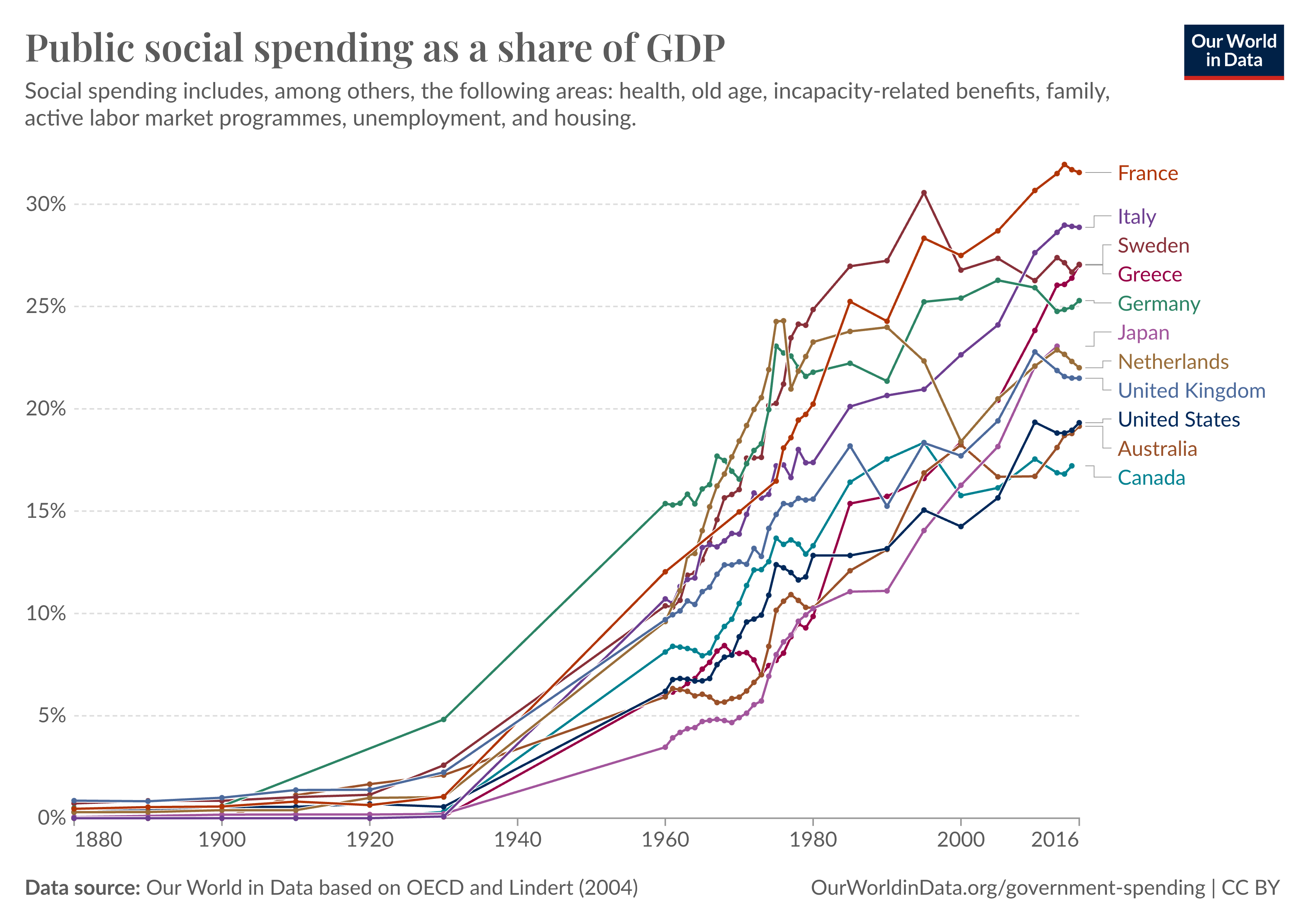
Correlation does not equal causation, but the historical evidence is clear:
If you want to improve life for everyone, grow the economy, and develop better technology.
But there are notable exceptions. During the Industrial Revolution, technological progress accelerated tremendously, with new inventions changing how we live and work forever. And then, what followed? The horrors of the two World Wars. By the end of the second one, many of the same inventions proliferated human suffering and environmental destruction on an unimaginable scale. WWII started first by using horses and ended with airplanes dropping an atomic bomb, the specter of which still haunts us today. What about progress was good here?2
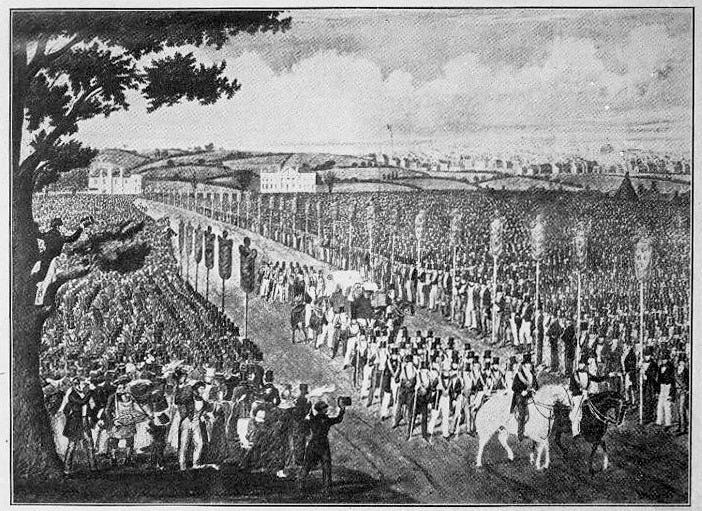
As mentioned above, historically, there’s evidence that advances in the different types of progress often go hand in hand. In his work, Karl Marx failed to anticipate the potential of worker unions to successfully change their environment from within the capitalist system rather than being drivers of radical change (Eidlin, 2019).
Still, there is no guarantee that this positive correlation trend will continue in the near future when some technological changes have the potential to be exponential. We can see the dangers even in contemporary cultural artifacts like films and novels. Cyberpunk, for example, shows a future where per capita productivity would dwarf what we have today and technological innovation is aplenty. Yet, human suffering is still widespread, resulting in a futuristic dystopia.
A simplistic, narrow definition of progress that fails to acknowledge its shortcomings in the past is bound to enable similar trajectories down the road. Changing our language - the essential tool for understanding the world and our history - is a good start. As I described in the first article, we should incorporate social progress as a foundational element of any definition of progress.
Resources
Pinker, Steven. Enlightenment now: The case for reason, science, humanism, and progress. Penguin UK, 2018.
Robinson, James A., and Daron Acemoglu. Why nations fail: The origins of power, prosperity and poverty. London: Profile, 2012.
Eidlin, Barry. Labor unions and movements. New York, NY: Oxford University Press, 2019.
Our World in Data: Public social spending as a share of GDP
Defining social progress is a separate topic, but imagine a congregation of factors such as social mobility, freedom of speech, access to essential resources, property, individual rights, etc.
Unfortunately, the picture is more complex: there was also a flow of inventions in the other direction; for example, the field of cybernetics has its origins in military research.